Navigating the Storm: Lessons from the Recent Cloudflare Outage on SSL, DNS, and Web Resilience

Alec Cantin
Published November 23, 2025 · 4 min read

Navigating the Storm: Lessons from the Recent Cloudflare Outage on SSL, DNS, and Web Resilience
In the modern digital landscape, continuous reliability isn't just a feature—it's the baseline expectation. Just days ago, the ecosystem experienced another ripple of disruption as Cloudflare, a vital backbone of internet infrastructure, faced a significant service interruption.While Cloudflare’s engineering teams contained the incident relatively quickly, the event served as a stark reminder of the fragile dependencies that govern web security and performance. It drives home the absolute necessity of robust SSL certification and proactive DNS management.
The Recent Cloudflare Incident: What Happened?
The latest outage, which affected a broad spectrum of websites and online services globally, appears to have stemmed from a rapid sequence of events—likely a complex internal routing or configuration issue—rather than a malicious attack or a physical infrastructure collapse. Current details point towards a system-level configuration anomaly that quickly propagated across their edge network.
This type of event is increasingly common in highly distributed systems. It proves that even the most robust providers are constantly battling the delicate interplay of complex software that underpins modern internet operations. Cloudflare sits at a crucial junction as a provider of Content Delivery Network (CDN) services, DNS resolution, and web security. When these services falter, the impact is immediate and widespread, affecting everything from personal blogs to enterprise SaaS platforms. Users trying to access sites were met with DNS resolution failures or generic "5xx" server errors, unable to establish a secure connection or even locate the host.
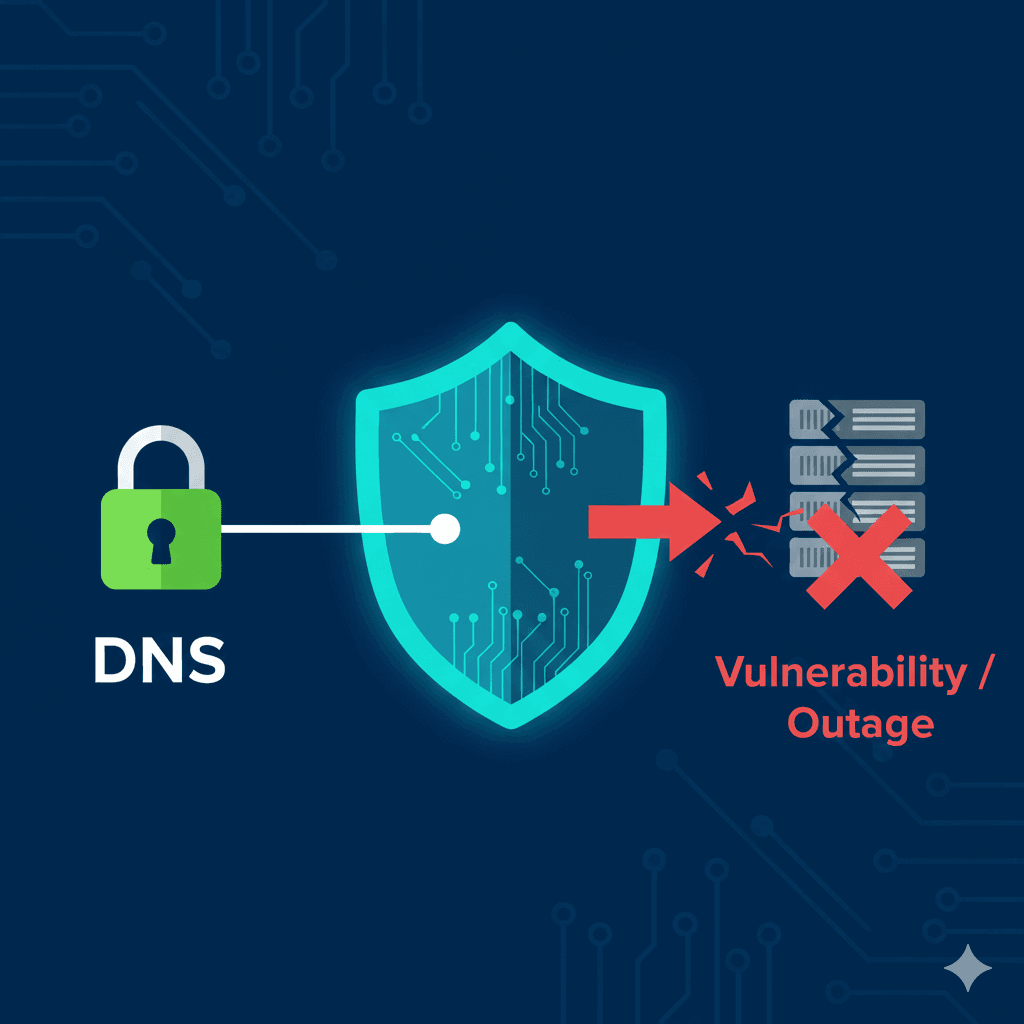
More Than Just "Down": The Role of DNS and SSL
When users hear "outage," the assumption is often that the hosting servers have crashed. However, with infrastructure providers like Cloudflare, the reality is more nuanced.
The DNS Impact
As a major DNS provider, Cloudflare acts as the internet's phonebook, translating human-readable domains into IP addresses. If DNS management services are impacted, websites relying on them become effectively invisible, even if the origin servers are perfectly operational. This disruption highlighted exactly why a redundant DNS infrastructure is critical for high availability.
SSL Certificates and the Handshake
Cloudflare also manages SSL certificates and acts as a proxy for TLS encryption for millions of sites. When an outage affects these services, it disrupts the secure handshake between a user's browser and the website. Even if a site is technically reachable, a browser may block it due to an inability to validate the certificate via the edge network. This underscores the importance of correctly configured SSL certification and the reliability of the chain of trust.
Drawing Parallels: Cloudflare and the Broader Cloud
While specific technical triggers differ, this incident shares fundamental DNA with other major cloud service disruptions. The phenomenon of server configuration issues leading to widespread inaccessibility is a recurring theme. We explored similar dynamics in our analysis of the Amazon AWS outage (https://www.vanitycert.com/blog/the-single-point-of-failure-what-the-aws-outage-taught-us-about-dns-resilience-and-custom-domains), where we broke down how centralized failures can cascade through supposedly redundant systems.
There is also the lingering issue of the "single point of failure." While infrastructure is designed for high availability, a critical bug can still ripple across a network. This echoes broader industry conversations about the risks of over-reliance on massive cloud providers. Understanding how services manage their SSL strategy and redundancy is key to avoiding these system-wide pitfalls, a concept we discussed when analyzing why your SSL strategy is now a marketing strategy (https://www.vanitycert.com/blog/why-your-ssl-strategy-is-a-marketing-strategy).
Lessons for Web Resilience
This event provides a syllabus for businesses and webmasters committed to hardening their infrastructure:
- Diversify DNS: Relying on a single provider carries inherent risks. Implementing secondary or tertiary DNS solutions provides a crucial fallback when a primary network stumbles.
- Monitor SSL Health: Proactively monitoring the status and validity of your SSL certificates is essential. Your strategy must account for potential disruptions in third-party validation services.
- Understand Your Dependencies: Map out every third-party service your application relies on, from CDNs to payment gateways. You need to know exactly what breaks when they go down.
- Implement Redundancy Beyond Hosting: True resilience requires redundant routing, security, and content delivery mechanisms. For example, achieving automated HTTPS and failover across various environments is a key benefit derived from approaches like using vanity domains to offer premium tiers and white-label solutions (https://www.vanitycert.com/blog/how-businesses-are-using-vanity-domains-to-offer-premium-tiers-and-white-label-solutions).
- Stay Informed: Real-time status updates are your best tool during an incident. Know where to look before the lights go out.
The internet is an intricate tapestry of interconnected services, and while perfection is unattainable, resilience is engineered. Each outage serves as a prompt to audit our own systems, ensuring that our SSL certification, DNS management, and redundancy strategies are strong enough to weather the inevitable storm.
Solve This Problem. Forever.
VanityCert.com is the automation engine built to eliminate the challenges you just read about. Stop managing SSL certificates and start building your product.
Book a Free Demo